
You may have heard of Stephen Wolfram, founder of WolframAlpha and the math-based programming language Mathematica. Wolfram likes to ask big questions about mathematics and computation and has published many scientific papers, books, and online essays. In 2002, he published a book called A New Kind of Science, which described the field of simple computational systems. Many simple computing algorithms are described from a mathematical perspective, and they are compared with real scientific phenomena. Wolfram predicts in this book that it will eventually be discovered that all physical systems can be modelled with simple computers and that this method will become the new standard in science.
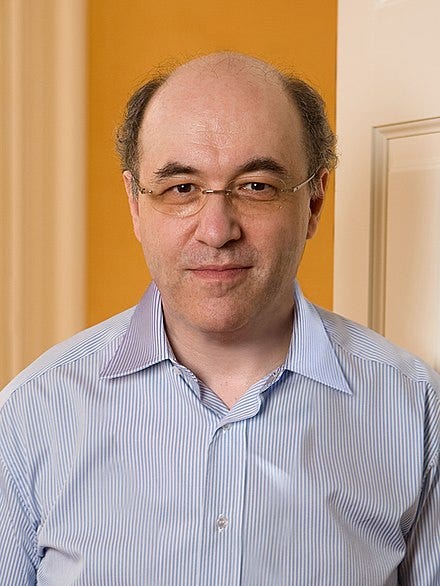
Stephen Wolfram (Source)
This book was highly controversial as it made incredibly broad claims about science as a whole with few citations to other work. Wolfram rarely acknoweldged the discoveries of other scientists which he relied upon, and in many cases did not follow a rigorous scientific method in his anaylsis. Wolfram has responded to these criticisms and is still holding his ground on the topic 20 years later. Despite the controversy, A New Kind of Science is still a very interesting read if done so with a healthy dose of skepticism. Simple computational systems have also become a significantly more popular tool in science as a result. In this article, I’m going to dive into a central feature of Wolfram’s book called cellular automata and their many interesting applications.