
JavaScript, you can catch all exceptions, including both built-in errors and custom errors, by using a try-catch block with a catch clause that acts as a catch-all for any type of exception. This approach allows you to handle unexpected errors and prevent them from causing your program to crash.
The try-catch block consists of two main parts: the try block and the catch block. The code inside the try block is the portion where you suspect an exception might occur. If an exception is thrown within the try block, the code execution is immediately transferred to the catch block.
Here’s the basic syntax of a try-catch block with a catch-all catch clause:
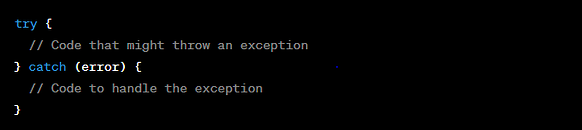
When an exception occurs within the try block, it is caught by the catch block. The exception object is passed as an argument to the catch block, and you can refer to it using a variable name of your choice (error in the example above). This variable holds information about the exception, such as its type, message, and stack trace.